Innovation Catalyst and Design Project
Delta Design Challenge
Designed a solution eliminating single-use plastic bottle waste on Delta Air Line flights using the human-centered design process
Goals
- Create a compelling narrative design supported by an engaging presentation deck that encapsulates all phases of the human-centered design process (i.e. Emphasize, Define, Ideate, and Prototype)
- Collect customer segmentation data in support of the designed solution
- Articulate value propositions and implementation strategy
Role
Researcher / Product Designer
Timeline
October - December 2022
Company
Delta Air Lines
Industry
Aviation
Challenge Overview
How might Delta Air Lines eliminate single-use plastic water bottles onboard to achieve an 80% reduction in SUP's onboard flights?
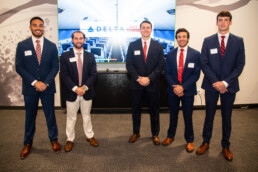
In collaboration with Delta Air Lines and the University of Georgia Student Industry Fellows Program (SIFP), eight teams of UGA students pitched solutions to help Delta eliminate single-use plastic bottles on its flights. Over nine weeks, our team (Delta Freestyle) constructed a prototype to achieve this ambitious goal. Each week followed the human-centered design process steps in creating the best solution for Delta’s most valuable customers.
- Weeks 1-3: Empathy & Research Methodology
- Week 4: Value Proposition Design Sprint
- Week 5: Ideation Sprint
- Week 6: Prototyping and Narrative Design
- Week 7: Presentation & Asset Prep I
- Week 8: Presentation & Asset Prep II
- Week 9: Fellows Presentation to Delta Leadership
Delta Design Priorities
- Reduce the quantity of individual products replacing plastic bottles on board
- Reassure customers that the vessel and water are clean with clear communication and messaging
- Provide customers and flight attendants with easy refilling options
- Consider premium / “healthier” water options
- Alternative to plastic cannot be made of any polymers
- Keep the service cycle simple and organized for flight attendants, from prep to collection and storage
- Incentivize customers to bring their own bottles in ways that are nonmonetary
- Concepts should be feasible to implement within the next 8 months
- Materials associated with any concept should be sustainable with a life cycle and closed loop in mind
- Scalability across cabins and length of flight across the network
Research
Week One
The challenge was introduced by Delta’s General Manager of Innovation Design Strategy. He described the current state of Delta’s onboard beverage service process and the sustainable goal that the company wished to achieve in the near future. Moreover, he explained the strategies that they have implemented in the past and the weak points in each while emphasizing what was to be expected in our designed prototypes.
Week Two
The following week, we heard from UGA’s professor of environmental engineering – Dr. Jane Jambeck – and asked questions about single-use plastic waste and alternatives. Additionally, I took this week to dive deeper into understanding the issue of single-use plastic waste and its effect on the natural environment.
Research Findings:
- Single-use plastics are goods that are made primarily from fossil fuel-based chemicals (petrochemicals) that are meant to be disposed of right after use- often in mere minutes.
- We produce 300 million tons of plastic each year worldwide, half of which is for single-use plastics
- Recycling more plastic, more frequently, reduces footprint. But a whopping 91 percent of all plastic isn’t recycled at all. Instead, it ends up in landfills or in the environment.
- Replacing one disposable product (e.g. made of plastic) with another disposable product made of a different material (like paper, or biodegradable plastic) is only likely to transfer the burdens and create other problems.
- Important to note that whereas single-use plastic products are often associated with lower prices, their actual costs are often much higher once the externalities that cause are taken into account
- However, for the environmental sustainability of the aviation industry, global airlines on all continents around the world must implement efficient environmental management.
- Airlines in Europe and Russia have the highest environmental efficiency, followed by North America and Canada
- For airlines in North America and Canada, the scale efficiency (SE) value was the lowest, even though having a high level of overall environmental efficiency, indicating the need for efficiency improvement through economies of scale
- San Francisco International Airport (SFO) was the first airport to adopt a triple zero goal – zero energy, carbon, and waste.
- Zero Waste — SFO is targeting a minimum of 90 percent diversion from landfill or incineration by 2030 using methods like recycling and composting in alignment with the definition set by the Zero Waste International Alliance.
- The covid-19 pandemic greatly impacted the tourism sector which contributed significantly to the decrease in the consumption of products packaged in PET, which is widely used in tourism-related activities → decreased price of oil made virgin plastics cheaper than recycled ones
- Despite the sharp drop in PET packaging in all activities related to the tourism sector, plastics have sharply increased by the emergency linked to the Coronavirus, but also for food safety and compliance with high-quality standards
- Because of the pandemic, some countries had to uplift their ban on single-use plastics in fear of viral spreading
- There is a strong relationship between PET packaging and tourism. Tourism is a key sector in the reproduction of plastic waste; it has been estimated that 200 million tourists who visit the Mediterranean every year, generate a 40% increase in summer plastic pollution (WWF, 2018). Moreover, in 2016, 53,000 tons of plastic waste were dispersed in the mediterranean sea.
- The demand for R-PET has significantly fallen, mainly due to the availability of significantly cheaper virgin PET on the market. The decrease in demand for recycled material has made collection, storage, and delivery more complex → closer to recycling plants(R-PET has dropped about 4%).
Week Three
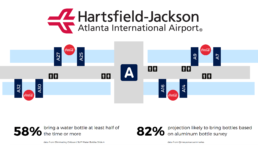
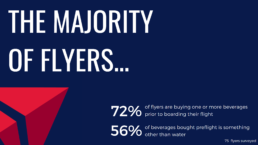
After my research to understand the effects of single-use plastics on the environment and their use on airlines, our team began to focus on the passenger’s characteristics and preferences. We did this by creating an online survey questioning recent Delta passengers’ beverage preferences and how they hydrate during their time at the airport and onboard flights. This included if they bring their own reusable water bottle or ask for a water bottle on the flight. We received 75 responses which confirmed that most people bring their reusable water bottles on flights which they refill with water prior to flights.
Two of our team members even went as far as asking passengers in person at Hartsfield-Jackson International Airport about their beverage preferences and conducting an observation analysis of how many passengers bring their own reusable water bottles. From this, we noticed how most first-class passengers didn’t carry a reusable bottle with them because of the limited space they have when traveling. Most looked like business professionals who just carried a briefcase and no bookbag that could hold a water bottle. We identified this as an area of emphasis when prototyping our solution.
Value Proposition and Ideation Sprint
Customer Segmentation
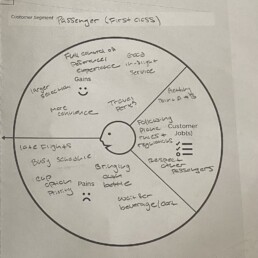
Our main objective was to reduce the number of plastic water bottles given out to passengers onboard flights. Past Delta research shows first-class passengers are much more likely to request a plastic water bottle than main and economy passengers. This means that first-class passengers were not as likely to bring their own reusable bottles with them as they traveled compared to other passengers. Therefore, we focused on first-class passengers and determined what would incentive them to bring their own bottles. We began by identifying the Gains, Pains, and Customer Jobs of first-class passengers.
Gains: Good in-flight service, full control of preferences/experience, larger selection, more convenience, travel perks
Pains: Late flights, busy schedule, cup/bottle option priority, wait time for beverage/food, don’t like bringing their own reusable bottles out of inconvenience
Customer Jobs: Getting from travel point A to destination point B, following plane rules and regulations, respecting other passengers and flight attendants
Ideation sprint
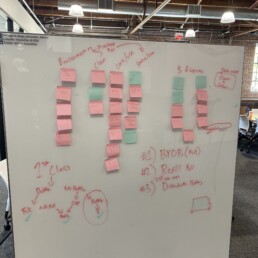
After completing the customer segmentation model, we began listing some of the areas of concern and issues associated with the current process of onboard beverage service on Delta flights. We did this by conducting a 30 min ideation sprint that categorized each into their own group. As a result, we organized each into one of five categories: Environment, Cleanliness, Convenience/use, Status/Class, and Money & Logistics.
From this, we created a flow chart of the first-class passenger water distribution process and priority system based on if they brought their own reusable bottles or not. This helped us get a better idea of what the priorities and preferences of first-class passengers are; as well as flight attendants.
Value Proposition
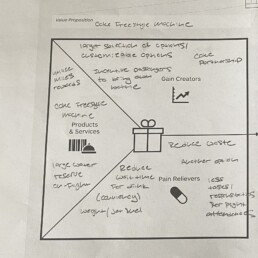
After assessing our customer segmentation model and categorizing issues and areas of importance associated with the current onboard beverage service process, we finalized our prototype and created a value proposition model with the Gain Creators, Pain Relievers, and Products and Services that would result from our solution.
Coca-Cola Freestyle Machine
Gain Creators: Coca-Cola partnership, a larger selection/ customizable options, incentive passengers to bring their own bottles
Pain Relievers: Reduce waste, Reduce wait time for drinks (convenience), weight/jet fuel, other beverage options, and fewer tasks/responsible for flight attendants.
Products and Services: Coca-Cola freestyle machine, utilize miles rewards, alternate water reserve
Prototype Solution
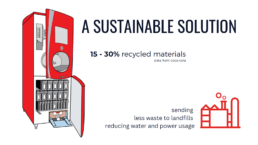
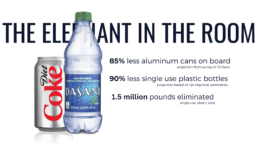
After completing our preliminary research, assessing the targeted customer segmentation, and brainstorming solutions to eliminate plastic water bottle waste on flights, we finalized our solution that would radically change the beverage service process on airlines. Our idea was to transfer the process of primarily serving beverages during the flight to offboard to select Delta gates with the Coca-Cola freestyle machine.
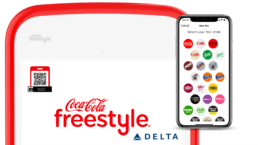
I originally thought of the use of the freestyle machine because of its popularity in restaurants, amusement parks, and even cruises. This machine allows customers to conveniently choose their own beverage from a variety of 120+ options while lessening the tasks of workers. I saw this as important with the current lack of flight attendants willing to work as well as the ongoing covid-19 pandemic. This solution would therefore reduce the demand for flight attendants as well as reduce to possible transmission of covid-19 from flight attendants handling passengers’ bottles.
Additionally, this solution doesn’t just target first-class passengers but all passengers on the flight. With a valid Delta boarding pass, passengers will have access to the machine with free refills prior to boarding the flight. Allowing customers to fill their bottles would not only incentive them to bring their own reusable bottles but also allow them to access free beverages as they wait at the gate before the flight. This expands the Delta experience and gives passengers more options while traveling. Moreover, to add to the experience of first-class passengers, they will have their own machine in the Delta sky club that only they can use and any assistance.
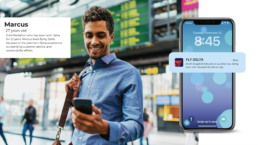
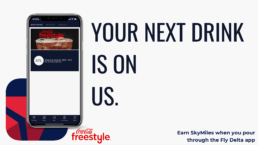
For our presentation, we created a narrative design showing how a passenger would use the machine and the benefits that they would receive. Through the Delta app, the passenger will have a voucher that allows them to access the Coca-Cola freestyle machine and receive SkyMiles as a reward for each bottle filled. Additionally, if running late and to save time, they can create their pre-mixes that can be accessed through the app and poured with a single tap of a button.
Final Presentation
Outcome
After presenting our solution to the panel of Delta Air Lines Executives and watching the other seven presentations from the other teams, the panelists judged each solution and awarded the top three teams. Our team was awarded third place with our solution “Delta Freestyle”. They thought our idea was the most “industry disruptive” and liked that we thought of the other factors such as logistics and adjacent benefits that could come with this prototype. The only issue they saw with the idea was how they were going to implement it at the gates and for international flights.
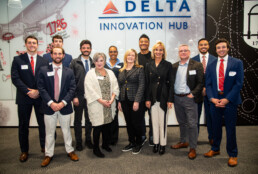
Through this experience, I have gained immense knowledge in developing products focusing on the customer experience while aligning with a global company’s initiatives in sustainability and innovation. I got to work first-hand on how to thoroughly follow the human-centered design process and construct a prototype that will benefit the airline industry. I am thankful that I had the opportunity to work alongside Delta to improve its sustainability efforts and innovation as a leader in the airline industry.