ILA Service Learning Project
Georgia Commitment Scholarship
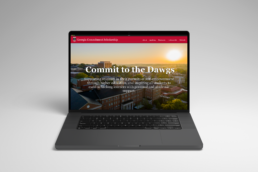
Created a website prototype for the Georgia Commitment Scholarship to increase awareness and provide resources for rural first-generation college students
Goals
- Increase scholarship awareness and access to Colquitt County high school students
- Tell the stories of current scholarship recipients whose college experience has been positively impacted by the community’s generosity.
- Attract new donors to give to the scholarship
Role
Project Manager /
Lead UX Designer
Timeline
Mar - Dec 2022
Tools
Figma
Platform
Web
Issue Identification
The Georgia Commitment Scholarship provides students from Colquitt County with support to make their dreams of attending UGA more accessible. While the scholarship provides financial aid, it also provides an entire network of support to facilitate a smooth transition from students’ homes to Athens. Though it is a fantastic resource, many students in Colquitt County are unaware of this scholarship. The overall obstacle this scholarship is facing that is inhibiting it from maximizing its impact in the Colquitt community is an overall lack of awareness. By increasing awareness, the following three needs should be addressed:
- Telling the stories of scholarship recipients whose college experiences have been positively impacted through the community’s generosity.
- Better highlighting the network that students gain access to upon receiving the scholarship that serves as a resource throughout their time at UGA.
- Attracting new donors to give to the scholarship.
Our Work
- Interviewed current scholarship recipients about the scholarship impact
- Conducted focus groups interviews with Colquitt County teachers, students, and administrators
- Researched current scholarship awareness and access
- Learned about culture and community through a site visit
- Identified recommendations
Research
Attitudes toward college in rural communities
- Attitudes toward college differ in rural communities
- Capable students are able to go to college based on intelligence and test scores
- Problem: lack the know-how in terms of applying to college and seeing the benefits of pursuing higher education
- Lack of knowledge → less likely to consider college
- More transparency about the college application process would benefit students
- Finances, applications, deadlines, etc.
- Common fears: money/finances, family, community, distance
Resources for first-generation students
- The biggest challenge to getting to college can be a lack of understanding of the process
- Difficult to locate accurate college resources such as admissions information and financial aid websites
- Students need sufficient guidance from high school teachers and counselors as well as other support and resources
- Creating a list of resources that covers some of the most beneficial information that students need when applying to college
Promoting College and the scholarship
- Students do not realize the cost of attendance for college or the long-term benefits of college.
- They do not feel enticed to attend college due to
- A lack of community
- Connection to other students and faculty
- Former Georgia Scholarship recipients say that they heard about the financial aid opportunities by chance.
- Promoting college and our scholarship can increase the chances that a student will pursue college.
Recommendations
College Prep Checklist
- Inform students of the necessary steps to prepare and apply
- Broken down by grade level (8th grade → Spring of senior year)
- Includes:
- Resources to explore career interests
- Funding for college (scholarships, grants, loans, and work-study jobs)
- In-person and virtual college fairs
- Can access the checklist on the Georgia Commitment Scholarship website
Student Watchlist + Mixers
- Create a watchlist of students
(Excelling academically + expressing interest in higher education)
- Work with teachers and school counselors to identify these students
- Hold mixers for these students to interact with: Scholarship recipients & Donors
- Builds community
- Allows students to hear about the scholarship’s significant impact
Organize Campus Visit
- Pick up and drop off from Moultrie, eliminate financial and transportation barriers of a college visit
- See UGA’s campus + hear about available resources
- Encourages students to apply
- Explain application process
- Introduce the Georgia Commitment Scholarship
- Providing students with opportunities to hear from current scholarship recipients will show them the scholarship’s immense impact
Highlight Recipients
Testimonials from current GCS recipients:
- Toriana Stewart
- Cameron Carr
- Savonte Wilson
- Katherine Monroy
Final Deliverable
After going through the focus group interviews, researching first-generation student barriers, and learning more about the community of Moultrie, we believed the key thing missing to increase the scholarship’s impact was a place that housed all the information on the scholarship and the college application process itself so eligible students could learn about it and have a better chance in receiving it. We wanted to make it clear that going to college was a feasible and possible goal and hopefully, by presenting this information and making it more accessible, we can make more students’ dreams come true! We also thought the website could be useful, not to only first-generation students, but students of all backgrounds and even in attracting donors by seeing the true impact of the scholarship.
Website Wireframe
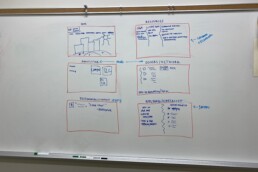
My team began by having a meeting to discuss the necessary content and resources that should be included on the website that would most appeal to prospective students and donors. After some discussion, we finalized 6 pages/sections: 1) Home, 2) About/FAQ, 3) Testimonials, 4) Resources, 5) Donors/Network, 6) Applying/Checklist
I then assigned each member of the group to a page/section to work on using Figma. They had never used Figma before so I wasn’t expecting a flawless high-fidelity prototype but wanted to see what everyone could make in the next few days. I was responsible for the ‘Applying/Checklist’ page/section so I worked on that over the next few days. And after about a week, I looked back at what everyone had created on their page/section and began working on completing the prototype for our final presentation.
Figma MVP Prototype
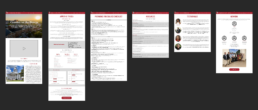
This is the final website prototype for the Georgia Commitment Scholarship which includes information about the scholarship and the recommendations our team had suggested to increase access and awareness of the scholarship to eligible students. There is a total of 6 frames which reflected our original wireframe design. However, I reorganized the content by combining the ‘Home’ and ‘About’ pages into a singular page and separated the ‘Applying to UGA’ page and ‘Checklist’. This made more sense in organizing the content since the checklist itself contains the most information on any page. Additionally, there are five tabs: 1) About, 2) Applying, 3) Resources, 4) Testimonials, and 5) Network. The college checklist is accessible by the button at the bottom of the ‘Applying to UGA’ page.
Homepage/About
- Features our team name (“Commit to the Dawgs”) and our mission statement (“Supporting students in their pursuits of self-empowerment through higher education, and inspiring all students to excel as lifelong learners with personal and academic support.”) As well as a background image of the Zell B. Miller Learning Center.
- Next, As part of one of our initial ideas, we thought that a video featuring the current scholarship recipients highlighting the scholarship’s impact would be useful for prospective students to see the real benefit of the scholarship itself and donors alike. So hopefully, in the future, a video can be created and placed here.
- Moreover, here’s just a little description of the scholarship itself and a brief historical overview of how the scholarship came to be.
Applying to UGA
With this page, I wanted to give prospective students a one-stop shop for all information needed when applying to UGA.
- First, I included the first-year admission criteria and the main factors that they take into consideration including high school grades, required high school curriculum, standardized test scores, school report/letters of recommendation, and additional factors.
- Next included a quick checklist for the admission requirements
- I also thought it would be important to include some stats from the most recent entering class so they can compare themselves to the average first-year student.
- Then, I included deadlines for both early action and regular decision deadlines as well as a quick explanation of the difference between the two because it can be confusing which one you should apply for.
Preparing for College Checklist
And then and the bottom of the page, there’s a button that brings you to a ‘Preparing for College Checklist’.
- Through our research, I saw it most beneficial to start the checklist during junior high school so students can start thinking about and preparing for college earlier.
- For 8-9th grades: I believed it was important to establish why college is important and worth striving for at the foundation and for students to view college as a stepping stone to their future dreams. Therefore, students at this age should bring up a conversation with their parents and think about what they want to do later in life. And for academics, we stressed developing good habits and taking challenging courses if available.
- Next, as they transition into high school, it’s important to continue developing those habits and taking challenging courses but also reach out to counselors and get curious about the college admission process and what’s required. During this first year, it’s important to start getting involved in school and community-based clubs/organizations.
- For 11th grade, I saw it beneficial to break it up into semesters and highlight what’s important during that time of year. So for fall, prepare for standardized testing, and in the spring and take the SAT/ACT.
- And as they approach senior year, think about applying to UGA and taking a visit during the summer since this time of year is less busy and students have more free time. This aligns with our recommendation of taking a campus visit to get a feel for the campus and all the resources available. As well as applying and hopefully getting accepted!
Resources
Additionally, one of the biggest challenges to getting to college as a first-generation student is the lack of knowledge and understanding of the resources they have available to them. So I incorporated a list of links to resources that students can benefit from when applying and figuring out how to prepare for college.
- We included the UGA first-year admission page to access all important information regarding admission into UGA as a first year.
- Then the UGA First generation website for information specifically for first-generation students and a PDF handbook.
- Next, we have the website for the DAE (Division of Academic Enhancement). They support the success of minority groups of the student body including first gen, low-income, rural, disabled, etc. in helping transition and graduate. I’m personally really involved here and they’ve helped me immensely with the transition into college and encouraged me to get more involved as a first-generation student.
- And here, we have UGA-specific financial aid pages to help students understand the financial process and get them in contact with someone if they have any concerns.
- Next, we have GAfutures with information about the HOPE and Zell scholarships and how to retain eligibility thought their time in college.
- And lastly, but probably most important, is the FAFSA. This application can be extremely confusing and difficult, especially when your parent isn’t familiar with it or have the financial information on hand so we included some links to hopefully help with understanding it while urging students to fill it out as soon as possible when applications open October 1st.
Testimonials
Next, we saw the issue of lack of promotion and benefits of the scholarship to high school students and donors alike so I wanted to include a way that they could relate to those who currently have the scholarship and see the ways it has benefitted them. So we included testimonials from 4 scholars, which highlight their background, current studies, and the ways that the scholarship has helped them personally to tell their stories.
Network
And lastly, we wanted to highlight those who make this opportunity possible by including information on the scholarship’s founder and the committee who work so hard to give students a chance to attend UGA and make their dreams come true. So here, we just included some placeholder information for the founder, Pete Sayeski, and some other scholarship committee members and the impact that the scholarship has had in your life. And hopefully, from the website and the information it provides, outside donors will feel compelled to donate to the great cause and send more students to UGA.
Impact
Our team hopes that with our extensive research, recommendations, and this website, the Georgia Commitment Scholarship will continue to increase its awareness and accessibility while positively impacting the lives of students who otherwise wouldn’t be able to attend UGA. As a first-generation student myself, I understand the lack of knowledge and stress involved when applying to college. Moreover, I was incredibly fortunate to have my education funded through merit-based and need-based scholarships that have allowed me to attend this great university. Without them, I would not have the many opportunities that I have today to continue my education in a field that I am passionate about. So, I took this service-learning project very personally and wanted to help those who are in the same position as I was just four years ago. Therefore, with the knowledge I’ve gained over the past four years I’ve been at UGA, I incorporated my insights into our final deliverable which I hope will be used when they create their official website.